

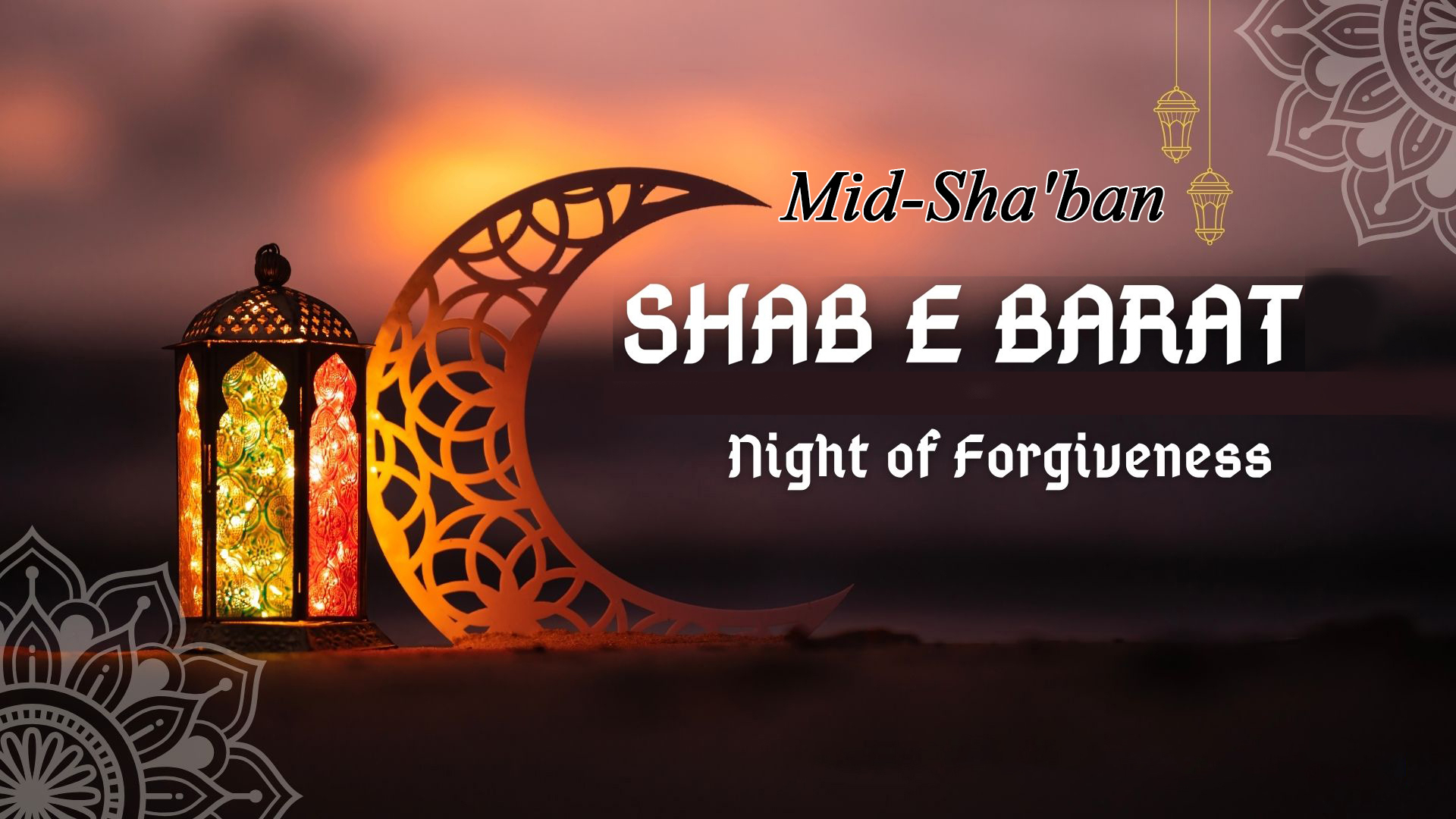
As the Islamic calendar approaches the 15th night of Sha’ban—known as Laylat al-Bara’ah or Shab-e-Barat—Muslims around the globe prepare for a night steeped in spiritual significance. Observed on the eve of the 15th of Sha’ban, this night is revered as a time when Allah’s mercy and forgiveness are abundantly bestowed upon His creation.
A Night of Forgiveness
Laylat al-Bara’ah, translating to “The Night of Emancipation,” is believed to be a night when Allah forgives the sins of believers who seek His mercy. According to a narration from the Prophet Muhammad (peace be upon him), “Allah looks upon His creation on the night of the middle of Sha’ban and forgives all His creation except for a polytheist or one who harbors hatred against others” . This hadith underscores the importance of purifying one’s heart and seeking reconciliation with others to attain divine forgiveness.
Spiritual Practices and Observances
While the Qur’an does not explicitly mention Mid-Sha’ban, various traditions highlight the Prophet’s practices during this month. It is reported that he would fast frequently in Sha’ban, more than in any other month outside of Ramadan. Aisha (may Allah be pleased with her) narrated, “I never saw the Messenger of Allah fasting for an entire month except in Ramadan, and I never saw him fasting more than he did in Sha’ban”. In many Muslim communities, the night is marked by additional prayers, recitation of the Qur’an, and supplications. Some traditions also associate this night with the changing of the Qiblah (direction of prayer) from Jerusalem to Mecca, though the exact date of this event remains a topic of scholarly discussion .

Cultural Variations and Debates
The observance of Mid-Sha’ban varies across different cultures and Islamic traditions. In South Asia, for instance, it is common for families to prepare sweets and distribute them among neighbors and the poor. Children may also participate in festive activities, such as singing and collecting treats .
However, not all scholars agree on the specific practices associated with this night. Some argue that singling out the 15th night of Sha’ban for particular acts of worship lacks a strong basis in authentic Islamic teachings and caution against innovations in religious practices .
A Prelude to Ramadan
Beyond its individual significance, Sha’ban serves as a preparatory period for the holy month of Ramadan. It offers an opportunity for Muslims to engage in self-reflection, increase in acts of worship, and seek forgiveness, setting a spiritual tone for the month of fasting ahead.
As the 15th night of Sha’ban approaches, Muslims are encouraged to utilize this time for sincere repentance, reconciliation with others, and deepened devotion, embodying the essence of mercy and forgiveness that defines this sacred night.