

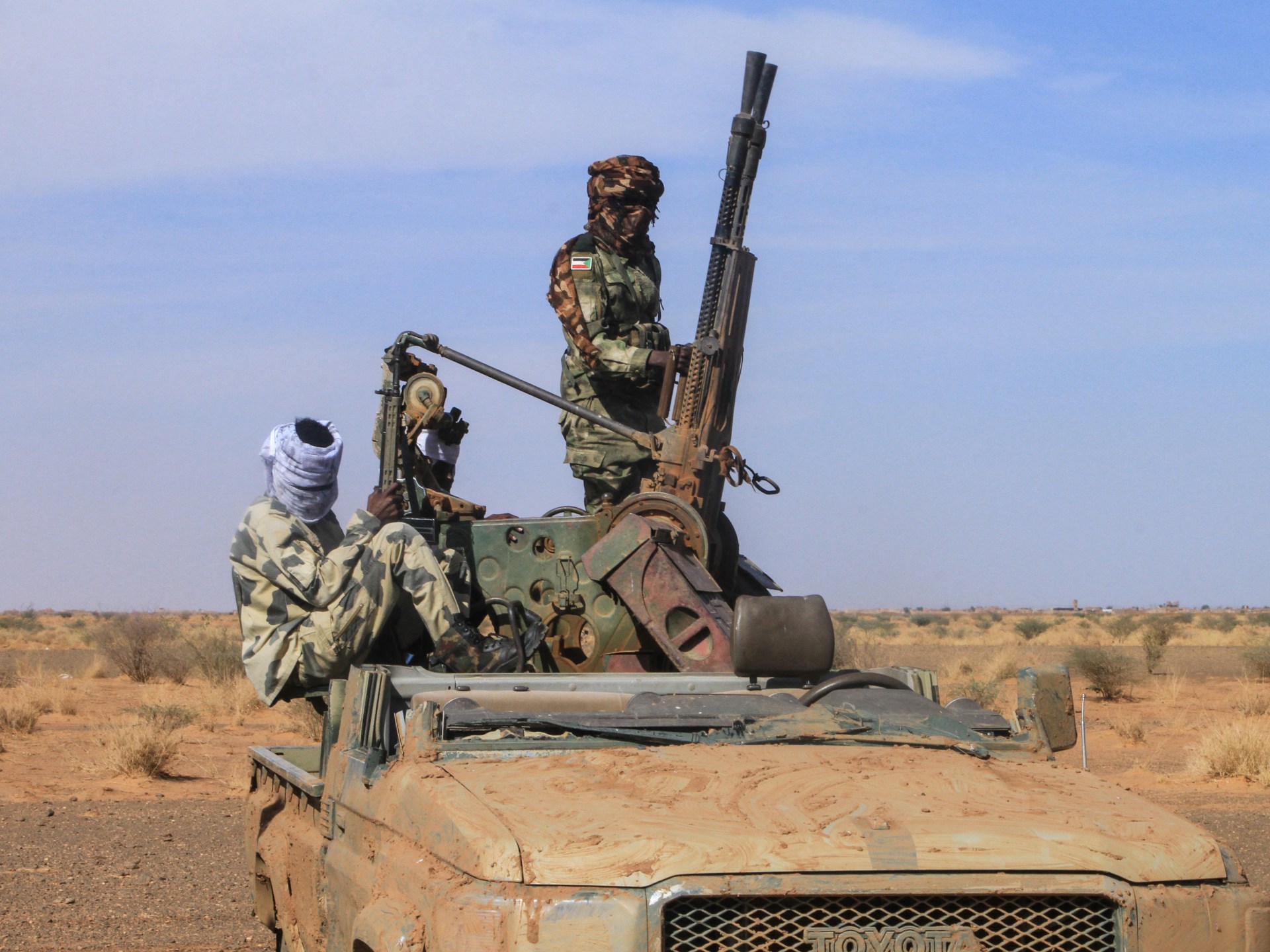
It has been more than three years since war erupted in Sudan, and its consequences continue to worsen. More people continue to be displaced and require basic humanitarian assistance to survive. On the surface, the conflict appears set to continue indefinitely.
At a recent Security Council briefing, a United Nations official noted: “The picture is bleak. … The parties continue to show no credible commitment to compromise or to pursuing a negotiated pause in fighting. They are not moving closer to dialogue.”
This assessment reflects the international consensus so much so that the United States has chosen in recent months to heap sanction upon sanction in a bid to “raise the costs of continued conflict” for the warring sides and force them into ceasefire talks. But what the view from New York and Washington misses and what became obvious after only a few days in Khartoum this month is that the conditions for a ceasefire are rapidly emerging from within the country.
A perfect storm of financial collapse, military advances and humanitarian catastrophe, along with growing civilian demands, is creating the long-elusive pressure for a ceasefire that could well take hold before the fourth anniversary of the war next April.
Khartoum, Sudan’s beleaguered capital, is no longer the ghost town that it was throughout much of the war. International flights now arrive regularly at the city’s modest airport from Cairo, Riyadh and Doha, carrying Sudanese looking to restart the lives the war put on hold and businessmen sensing a ceasefire on the horizon and angling to get in on the ground floor of the country’s rebirth. At one of the city’s leading business hotels, the lobby was buzzing with British, Swiss and Saudi business groups there to close deals on everything from mining to commodity trading to reconstruction.
But Sudan’s leaders don’t just see the opportunities; they are also feeling the pressure of an economy in freefall. The week I was there, the Sudanese pound fell to a then-record low of 9,000 to the US dollar, compared with a pre-war average of 600. (The exchange rate now exceeds 10,000.) Petrol queues stretched for blocks, even for those lucky enough to be able to afford to fill their tanks. Many of Khartoum’s returnees, more than 2 million of the roughly 3.8 million people who fled, are struggling to buy groceries and keep the lights on. Worse still, farmers can no longer afford fertiliser, leaving much of the country’s most productive cropland lying fallow.
A senior official acknowledged to me privately that the war economy, which enabled Sudan’s army to procure the weapons needed to turn the tide of the war, is now the greatest source of pain for the country’s population. The pressure on Sudan’s leaders to reverse the economic decline is real and is creating a new demand to end the fighting.
Friendly states like Turkiye and Saudi Arabia have pitched in, pursuing agreements to secure fuel supplies and rebuild energy infrastructure, but such support remains limited and temporary. Protests over transit costs recently broke out in Atbara, the northern city where protests against skyrocketing bread prices began in December 2018, helping to spark Sudan’s 2019 democratic revolution. Economic protests unified the country before and could do so again, and the military knows it.
Beyond the economy, it is the military’s battlefield gains that are creating the conditions for it to contemplate a ceasefire. Army chief Abdel Fattah al-Burhan has promised to reclaim “every inch” of territory. He has succeeded in pushing back a new offensive in southeastern Sudan’s Blue Nile State and is advancing farther west in West Kordofan, where the army and its allied Joint Forces recently retook the strategic town of el-Khuwei and several surrounding areas, increasing the army’s control to roughly two-thirds of the country.
Fighting for control of the western region of Darfur, the only region almost entirely under the control of the Rapid Support Forces (RSF) paramilitary, could be costly and time-consuming. But a year after the fall of el-Fasher, the capital of North Darfur State, to the RSF amid atrocities that a UN fact-finding mission said bore the hallmarks of genocide, efforts to retake the area would demonstrate that the military’s commitment to unify the country wasn’t just battlefield bravado. Making inroads in Darfur would also paint the RSF into a corner and give the army both tactical gains and a strategic advantage in ceasefire discussions.
The final reason why a ceasefire has become so urgent is the spiralling humanitarian crisis in the country, which has been at crisis levels for months but could well become catastrophic by year’s end. Adding to the internal displacement, restrictions on humanitarian access and lost food production is this year’s “Super El Nino”, which has disrupted Sudan’s annual rains and devastated whatever meagre harvest was expected.
With more than 40 percent of the population already facing “acute food insecurity”, according to the Integrated Food Security Phase Classification hunger monitor, projections suggested that Sudan’s hunger crisis could deteriorate dramatically by mid-2027 when food shortages are expected to be at their most severe. The only way to avoid or even mitigate that outcome would be through a ceasefire in the coming months that enables a massive influx of lifesaving aid.
As conditions on the ground make a ceasefire more urgent, Sudan’s own plans for the day after the fighting are becoming clearer. With each ceasefire proposal the military rejects, public demand for a deal grows as people become increasingly exhausted by the war.
Talk of an inter-Sudanese dialogue, political reconciliation and eventually elections is also becoming more common, creating greater expectations that fighting should soon come to an end and responsibility for day-to-day governance and service delivery be transferred to civilians. While these efforts remain inchoate, the demand for them is building.
Ultimately, it is the attitudes inside Sudan that will create the momentum for peace, not the external pressures and punitive measures employed by the international community. As conditions for civilians inside the country continue to deteriorate and the military’s position stabilises, there is hope on the horizon that a ceasefire could be achieved. The international community should focus on supporting these internal conditions before the dire warnings about the economy and humanitarian situation become reality.
A version of this article first appeared on Al Jazeera Arabic.
The views expressed in this article are the author’s own and do not necessarily reflect Al Jazeera’s editorial stance.
[ Peace News Desk ]