

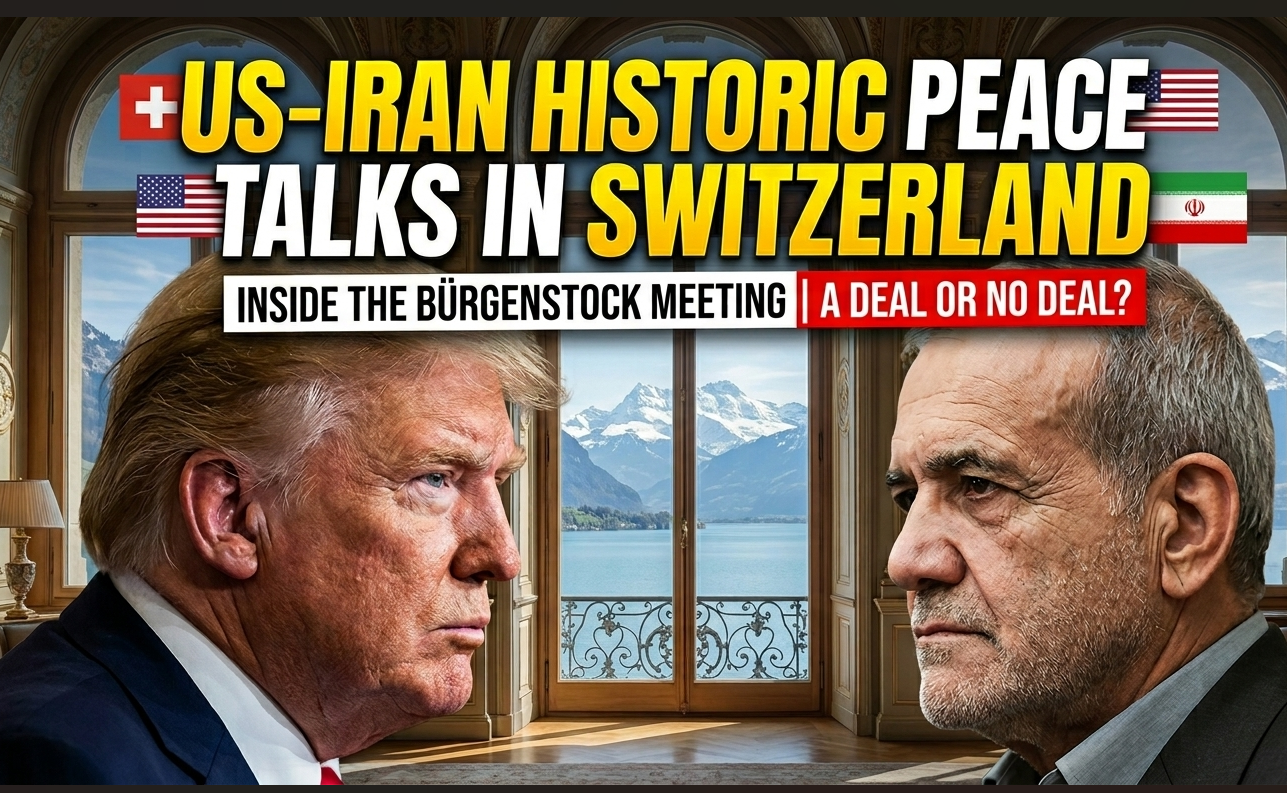
A historic high-level meeting between the United States and Iran is kicking off today (Sunday, June 21, 2026) in Switzerland, aimed at finalizing a comprehensive peace treaty to reshape Middle East geopolitics.
Following a groundbreaking 14-point draft Memorandum of Understanding (MoU) signed on June 17, diplomatic teams have gathered at the exclusive Bürgenstock Resort near Lausanne, Switzerland. The talks, heavily mediated by Qatar and Pakistan, resume today after a brief delay on Friday due to escalating tensions between Israel and Hezbollah in Lebanon.
The Key Players
Both nations have sent top-tier political and economic strategists to navigate the complex negotiations:
- United States: The delegation is led by Vice President J.D. Vance, alongside President Trump’s special envoy Steve Witkoff and senior adviser Jared Kushner. Before departing, Vance told Fox News that Washington holds “all the cards” going into the room.
- Iran: Tehran is represented by Parliament Speaker Mohammad Bagher Ghalibaf, accompanied by Foreign Minister Abbas Araghchi and Central Bank Governor Abdolnaser Hemmati.
Core Agendas & The 60-Day Ultimatum
The negotiations are bound to a strict 60-day roadmap laid out by U.S. President Donald Trump. The core discussion points include:
- Strait of Hormuz & Maritime Security: Ensuring the uninterrupted flow of global energy and commercial shipping through the crucial strait, reversing Iran’s recent blockading threats triggered by the Lebanon crisis.
- Nuclear Program & Sanctions Relief: Establishing verifiable limits on Iran’s nuclear ambitions in exchange for structured, sweeping rollbacks of economic sanctions, marked by the presence of Iran’s Central Bank Governor.
- Regional Ceasefires: Iran is actively leveraging the talks to push for a broader, comprehensive ceasefire in Lebanon and Gaza, directly tying regional stability to the final treaty’s success.
The Stakes: President Trump has issued a strict warning: if a final, binding treaty is not signed within the 60-day window, the U.S. will impose aggressive maritime toll tariffs on all shipping through the Strait of Hormuz alongside severe defensive countermeasures.
The outcome of the Bürgenstock summit over the coming days will likely dictate the short-term stability of global energy markets and determine whether decades of hostility can transition into a sustainable diplomatic framework.
-Peace News Desk